Deconstructing the “Animal” in the work of Gustafsson&Haapoja
Terike Haapoja
Upcoming in: Routledge Companion to Art, Design and Animal Studies (Ed. Elizabeth Sutton)
Download pdf
In Frames of War Judith Butler writes that there is “no life and no death without a relation to some frame. Even when life and death take place between, outside or across the frames by which they are for the most part organized, they still take place (…)”. How things are framed – visually, politically, ideologically – not only visibilizes life and death, but determines their value. “The problem is not merely how to include more people within existing norms, but to consider how existing norms allocate recognition differentially”. They continue to ask what can be done ”to shift the very terms of recognizability in order to produce more radically democratic results?” Yet, while they are concerned with the ethics of social and political exclusion, Butler’s work is in itself limited by the anthropocentric framework within which it operates. The more-than-human world is, to use Butler’s vocabulary, framed out of the picture of ethical consideration, and thereby rendered invisible. Yet the figure of “the animal” stands out from the excluded nature as something that is, indeed, invisible and excluded from the human domain, yet simultaneously included and hyper-visible within it. The animal is framed, in the other sense of the word: it is scapegoated, made suspect, pointed to by the finger of justice as eternally guilty of posing a threat to those who belong to humanity.
“Animal” is an evasive concept. We are, biologically, animals, and exist in taxonomical proximity to other creatures in the animal kingdom. At the same time, in everyday vocabulary, there are humans and there are animals – all kinds of nonhuman creatures who belong together merely due to the simple fact that they are not people. Yet, we know from histories of war, persecution and discrimination that some people are considered animals, or can become considered animals, or can become human after once being considered animals. What or who is an animal seems then to refer to everyone and no-one, depending on the context, and on who is speaking.
In The Open – Man and Animal Giorgio Agamben traces the long history of the human-animal distinction in Western thought. This history is marked by a desire, an obsession even, to articulate a humanity that is in one way or another separate and superior to the animal body that it inhabits. Agamben examines how an eternal soul, rational intelligence, a particular relationship to being, or even the ability to recognize itself as human, have all been proposed as markers of humanity’s special status among creatures. He famously calls this obsession an “anthropological machine” that operates within Western thought, and which tries to perform this separation in new ways in every era. Yet the underlying animal body, and its relationship to all other animals and to the material cycles of life it arose from, remains. Because we are animals, it is not possible to anchor the features of humanity to any capacity or form that would mark a categorical difference from the animal body. The body thus haunts the transcendent human, who is always in danger of being pulled back down into its materiality and reduced back to the animal.
Instead of biological definitions, the concepts “human” and “animal” are, therefore, first and foremost moral categories that determine whether someone is entitled to ethical consideration, and what follows from this designation. Animal is, in other words, a boundary-making concept that serves as a way of setting the limits of humanity and, more specifically, the limits of belonging to the human community. When someone is called an animal, they are excluded from this belonging, and from the privileges and protections that belonging guarantees. This concerns creatures of other species as well as individuals and groups of our own kind. The animal is, therefore, always already entangled with other social divisions, and impossible to think of as merely something that concerns other species.
Yet, other species do also exist. There are experiences that are different from the experiences of the human animal, and which we have few means of knowing. Science tells us a great deal about the working of the natural world, and fields such as behavioral ethology are able to point towards possible psychological motives and inner states of nonhuman animals. But, as Thomas Nagel argued in his essay What Is It Like To Be a Bat, we have no way of knowing what other beings experience. Their reality, or ‘umwelt’, to use a term coined by the nineteenth-century biologist Jakob von Uexküll, is created by a sensory system that is particular to each life form and which determines how the external reality becomes knowable to them. This, of course, is true of humans, too, even when we consider scientific apparatuses as extensions of our senses. We live in intimate coexistence with all kinds of beings, yet, how they experience this intimacy is forever out of reach for us. The only thing we can know with relative certainty is that it is like something to be a bat – and that while we do not have access to how exactly it knows us, it does know us in its own ways.
The collaborative projects that Laura Gustafsson and I have created together, under the name Gustafsson&Haapoja, explore the figure of the animal and its social construction in Western culture. While the projects presented here approach the animal from different angles, and even foreground particular animals, they never make claims about nonhuman animals as such. In fact, images of nonhuman animals remain largely absent from our works. Instead, our projects explore how the figure of the animal is activated for political purposes, and what different functions it has in society. Here, the animal, while itself invisible, becomes a point of departure and a lens through which to see the human world and its organizing principles, power structures, and struggles for recognition. Appropriating social institutions, such as a museum, a courtroom, or a labor movement, allows us to visibilize the anthropocentrism built into these institutions, and challenges us to consider the possibility of a multispecies society. Further, by borrowing a social form we invite audiences to participate in these institutions, not as viewers of art works but as inhabitants of a society whose institutions are authorized by our believing in them. In this way we hope to call into question the social contract that excludes more-than-humans from the frame, and suggest that another social contract is just as possible.
The figure of the animal other is not, however, merely a means for ultimately anthropocentric ends. The violence that human beings are subjected to by being deemed “animal” is unleashed on nonhuman animals with the same force, only on a scale beyond imagination. Further, expropriation of the nonhuman animal body and its physical and metabolic labor is a central feature of capitalism, and as such also one of the driving forces behind the climate crisis. The question of the animal is therefore one of the most urgent moral questions of today. By refusing to depict the animal other we do not intend to dismiss its importance, but the contrary: we want to respect its mystery, and to avoid possessive, epistemic gestures of our own, while acknowledging its presence, and its gaze on us.
Our projects explore how notions of history, law, ideology and economy activate the figure of the animal in order to frame what it means to be human. Deconstructing these discourses and the hierarchies they are premised on resonates with other narratives “from below”, yet, the figure of the animal is entangled with all the other exclusions, whether they activate race, gender, ethnicity, class or some other denominator as their justification. The animal, as the negative image of humanity, is the archetypical other of society, and therefore constitutive of it. A full picture of our world therefore requires expanding the frame in order to make this foundation visible, but also, and more importantly, to expose the way in which the animal, and everyone who is subjected to animalization, is framed as always already guilty and vile, and undeserving of justice.
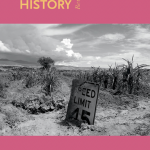
Multispecies History from Below – The Museum of the History of Cattle
<Figure 1 here>
Outlining what they call the materialist conception of history, Marx and Engels write: “The first premise of all human history is, of course, the existence of living human individuals. Thus, the first fact to be established is the physical organization of these individuals and their consequent relation to the rest of nature […] Men can be distinguished from animals by consciousness, by religion or anything else you like. They themselves begin to distinguish themselves from animals as soon as they begin to produce their means of subsistence, a step which is conditioned by their physical organisation.” According to historical materialism, by producing their means of subsistence humans not only transform the world, but also transform themselves, giving rise to particular ways of organizing societies. Every society inherits the previous order and builds on it, eventually breaking from one form to another through class struggle. History, then, is the unfolding of culture from these material conditions, carried forward by human labor.
For Hannah Arendt, who confronted the work of Marx nearly a century later, laboring for subsistence is merely the most basic form of human activity. She writes in The Human Condition: “With the term vita activa, I propose to designate three fundamental human activities: labor, work, and action. They are fundamental because each corresponds to one of the basic conditions under which life on earth has been given to man.” While labor is what all animals do to survive, it is only in the material environment created through work that political action becomes possible. History, therefore, is not the effect of labor, but of the uniquely human capacity to create intergenerational culture through work. For both Marx and Arendt, history is a strictly human phenomenon. For Marx, by creating means of producing their subsistence humans distinguish themselves from other animals who merely live off what they find. Arendt, in turn, states that it is only through work and action that humans create cultures and make history, in contrast to what she calls animal laborans, beings completely preoccupied with their biological survival.
And it is true that grasping history requires a way to see beyond the horizon of one’s own lifetime, and an ability to express abstractions that represent things past. Language, and later writing, seems thus necessary for history in this sense to exist. Yet, while writing is a human activity, it emerged in the wake of the agricultural revolution which is defined by domestication of plants and animals. With increasing need for trade and storage of harvested crops came the need for accounting, which developed into more complex pictorial and phonetic symbols. The domestication of dogs, sheep, pigs, cattle, horses and llamas, among many other animals, were crucial for these developments. Cattle and oxen, in particular, were needed to fertilize crops with their manure, and later to plough the fields. We might say, then, that it is not human labor first and foremost, but plant and animal labor that made human subsistence possible. By harnessing the labor power of plants and animals, human societies could settle down, grow and flourish, and develop writing and culture which became what we now understand as the history of human civilizations. Can we, then, claim history as a solely human phenomenon, when so many living things have taken part in its unfolding? While we only have mostly human accounts of history that tell a story of human progress, there are millions of other accounts of this process and of our co-development. We, humans, might dominate these stories, often by violence and force, but we are not the protagonists of them. All these more-than-human others have their own stories and their own understanding of our shared histories.
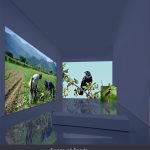
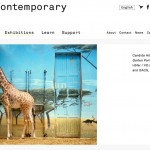
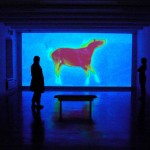
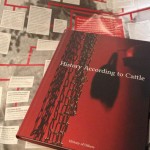
The Museum of the History of Cattle (2013), the first project by Gustafsson&Haapoja, is an experiment in narrating world history from a particular more-than-human perspective: the bovine. Since cattle have been instrumental for the rise of human civilizations, and remain central to current-day economies as well, it seemed appropriate to center on their way of seeing us in our attempt to write a nonhuman history from below. Because cattle do not use language the way humans do – for cattle, the tongue is a means of touching, as we wrote in the exhibition – the project does not intend to reach bovine audiences. Instead, by imagining how cattle view our shared reality we attempt to see humanity and its values from a different perspective.
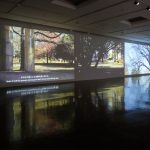
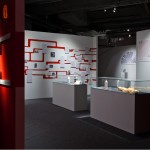
The project takes the form of a 200m2 ethnographic museum with vitrines, wall texts and timelines. But while traditional ethnographic museums present many objects with little context, The Museum of the History of Cattle mainly exhibits the context with only a few items on display. Narrated in different registers of language, the Museum’s exhibits take the viewer through the story of ancient Aurochs, who roamed the continents for nearly a hundred thousand years; the capture of cattle life by the aggressive apes that call themselves “human”; the human obsession with breeding and the development of genetics in the last 150 years; and the industrial process by which bovine time as open-ended existence was replaced by clock-time, which determined their destiny from insemination to premature death. This is the reality of the more than 1,5 billion cattle living and dying today. Lastly, the Museum imagines life after humans and the difficult return to the forest and life in freedom.
Even if the project mimics a museum and tells the story of cattle in human language, it does not suggest that it simply represents some imaginary account of bovine life. Instead, the project shows the limits of normative language – both written and institutional – in order to point to what is unsaid and invisibilized. Thus, The Museum of the History of Cattle does not pretend to present cattle history simply “as it is”, rather, it maps the outside of the void in the center of human history in order to point to the absence of the cattle perspective from it.
From Things to Persons – The Trial of Nonhuman Legal Personhood
The English word “cattle” is derived from the Old English word catel, which meant personal property, and the Latin word capitalis, meaning head. The modern English word “chattel” is a reminder of this connection. It is said that cattle were the first type of property, and cattle theft the first type of theft.
Western legislation, derived from ancient Roman law, divides the world into two basic categories: persons and things. Persons can be natural persons – human beings – or legal persons such as states, corporations, or associations. A defining characteristic of a person is that they can possess rights, such as bodily integrity, property ownership, or the right to enter into contractual relations. Things, on the other hand, can only be objects of ownership or instruments for the realization of a persons’ rights. With a few exceptions, in modern Western law all of the more-than-human world belongs to the category of things that can become commodities or property. Even though nonhuman beings or natural entities can be protected, they cannot be rights bearers themselves. Thus, the nature-culture and human-animal divide becomes a concrete reality through legal frameworks and the political theories that underpin them. This order does not merely exclude the more-than-human world; the exclusion of the nonhuman is the very basis upon which the entire structure is built. Struggles for inclusion of the enslaved, women, children, the disabled or other human groups mark the desire to expand the circle of rights, but not necessarily an attempt to dismantle its foundational structure of exclusion. At the same time, these struggles remind us of the fact that personhood has nothing to do with biological belonging: it is a social construct that can include or exclude anyone depending on political will.
The Trial, a participatory courtroom performance commissioned by the Baltic Circle Festival in 2014, activates the question of nonhuman legal personhood using theatrical re-enactment of a court case on wolf poaching in which 15 men were accused of illegally killing three wolves, an endangered and protected species in Finland. The performance took place in Helsinki at the same time as the actual trial was going on in the courts – only in our version, the remaining wolves of the pack were there as the plaintiffs, who demanded punishments and compensation for their injuries. The original legislation, which does not recognize the victimhood of the wolves but instead calls for compensation to the State, was discarded and replaced by a new penal code that articulated punishments for “wolf slaughter” and “murder”, and acknowledged the rights of the wolves to live without fear of persecution. Members of the audience were selected for the role of the jury, which gave the verdict at the end of the performance. In all the performances, the juries gave a harsh penalty for the murder of the wolves, as well as substantial compensation for the remaining pack, demonstrating how easy it is for people to accept a different legal framework.
The Trial was inspired by the real-life example of The Nonhuman Rights Project, founded by the late Steven Wise, which for decades has fought in the US courts on behalf of captive chimpanzees, orcas, and elephants. The strategy of The Nonhuman Rights Project draws from the seminal work on animal ethics by Peter Singer. According to Singer, discrimination against nonhuman animals should be seen as speciesism, because it is structurally identical to other forms of arbitrary discrimination, such as racism or sexism. Singer’s argument is inspired by Immanuel Kant’s moral theory, which justifies the intrinsic value of human beings by their capacity for autonomy and self-reflection. Singer counters that, if we take this logic seriously, then actually many human beings – such as infants, the severely disabled, or the very elderly – would also not qualify as rights-bearing individuals. Therefore, if moral consistency is to be maintained, the intrinsic value and rights of a being should be determined by their actual capacities rather than species membership. This would imply that some nonhuman animals – such as orcas, chimpanzees, or elephants – might qualify as rights bearers, while some humans might not. For those concerned that placing fundamental human rights on a sliding scale might expose vulnerable human individuals to harm, Singer responds that the price of current moral arrangement is paid by nonhuman animals who have no rights at all.
The Nonhuman Rights Project argues in its court cases that, if the law recognizes certain capacities – autonomy, social needs, self-reflection – as grounds for seeing captivity as harmful, these criteria should be used for all beings that possess such capacities, regardless of their species. The organization uses the legal device of habeas corpus, a strategy famously used by abolitionists in slave trial cases in the past, to convince a judge that the plaintiff is being illegally held in captivity. By using this device the organization does not intend to draw an analogy between the enslaved human being and the nonhuman animal, but to show that, similarly to the human, the nonhuman animal is also imprisoned without a cause. Implicit in such a verdict would be a recognition of the basic right to freedom of the nonhuman animal, and thus also its personhood and legal standing. The Nonhuman Rights Project has successfully brought cases up to the highest levels of US state courts, but has not yet been able to breach the last barricade and win a case. In its 2022 decision on the fate of Happy, an elephant held at The Bronx Zoo, The New York Court of Appeals stated that while they are sympathetic to the lawyer’s argument, they are not willing to rule in its favor, since such a decision would lead to a flood of litigation against “farmers, pet owners, military and police forces, researchers, and zoos.”
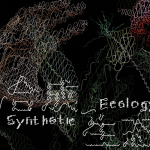
Museum of Nonhumanity – a Memorial to Ideological Anthropocentrism
<Figure 2 here>
By challenging the arbitrary rules of the legal order, The Nonhuman Rights Project attempts to question its evident speciesism. What makes this effort challenging is that the animal has never been a species concept to start with. Because the category “animal” is not based on any biological foundation, it can be extended to include anyone or anything – regardless of species. If animality is a moral rather than biological category, it is possible to view the prevailing human-animal hierarchy not as a result of speciesism, but as a result of ideological anthropocentrism, which places a very particular kind of human at the top of the hierarchy.
In the globalized Western tradition that reaches from ancient Greece to the enlightenment all the way to today, the normative human has been defined by whiteness, maleness, and Europeanness. Those who deviate from this figure have been, and still are, perceived as less than fully human. Racism, sexism, or xenophobia all operate through dehumanization – in other words, through animalization. The figure of the animal as the vilified “other” is the necessary condition for these forms of exclusion. Thus, different branches of posthumanist theory share a view that “human” and “animal” are not biological but ideological and political categories linked to the exercise of biopower. From this perspective, simply expanding the circle of rights around the normative human to include more and more groups is insufficient. Instead, it is necessary to dismantle the norm itself and to replace it with a non-anthropocentric model of rights and belonging.
Posthumanism has, however, been critiqued by postcolonial theorists and scholars from non-Western cultures for overlooking ways in which the colonial and white supremacist notion of humanity has already been challenged in non-Western traditions. Philosopher Syl Ko, for example, argues that the emergence of race as a concept and the weaponization of racialization have fundamentally shaped our understanding of the human-animal divide. According to Ko, animality and race are deeply intertwined, one informing the other. Therefore, we cannot dismantle the concepts of human and animal without also dismantling the mechanisms of racism – and, dismantling racism in turn requires a radical rethinking of the human-animal relationship. In the framework of post-colonial critique, the deconstruction of the human is not merely a theoretical exercise – it is a matter of survival with immediate political stakes. From this perspective, a posthumanism that ignores non-Western and post-colonial knowledge systems risks reproducing the same possessive gestures of European colonialism it seeks to critique.
In their work on moral philosophy Judith Butler writes about grievability as central for determining what life is valued in society. Echoing the work of Jaques Derrida, Butler argues that grieving does not take place only after the loss, but is a constitutive element in all meaningful bonds. In “The Taste of Tears” Derrida writes: “To have a friend, to look at him, to follow him with your eyes, to admire him in friendship, is to know in a more intense way, already injured, always insistent, and more and more unforgettable, that one of the two of you will inevitably see the other die.” The pre-emptive grieving of the unavoidable separation is what makes being together so valuable. Life that is grievable, Butler notes, is life that is valued and supported in order for it to live long. Being recognized as fully human means, in most cases, also being recognized as grievable life, while those deemed to be non-, sub-, or less human are seen as life that merely perishes without being a loss.
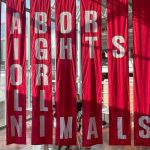
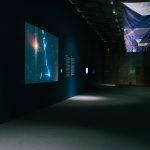
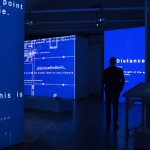
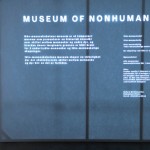
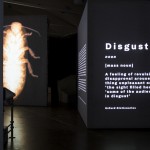
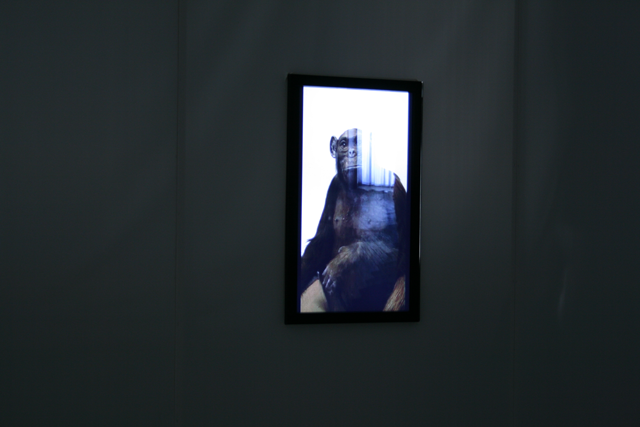
Museum of Nonhumanity is a utopian memorial museum dedicated to the history of the distinction between human and animal in Western thought, and to the exploitation and violence that this division has justified. It presents an 11-channel, 70-minute video installation composed entirely of archival images, encyclopedia quotes, and dictionary entries that examine how the mechanism of animalization operates in the history and presence of capitalist Western culture. By appropriating the form of a memorial museum Museum of Nonhumanity reminds us of the ways in which animality functions in rendering beings – of all species – un-grievable and thus killable, and providing a space of mourning for the invisibilized violence made possible by this mechanism. Instead of cataloguing all the atrocities made in the name of this divide, the Museum presents different discursive devices that facilitate animalization. This can happen for example by deeming some to be legally non-persons; by seeing some as mere resources; by denying that some have a soul or a rational mind; by cultural othering; by linguistic distancing and using euphemisms, or by weaponizing epistemic arrangements such as museum displays.
Visibilizing these mechanisms makes clear that the violability of animalized bodies is socially constructed, and not natural. These lives should be, and are, grievable. Mourning is therefore not an end but a starting point for demanding that all animalized life be valued and treated as deserving of being cared for. In addition to the exhibit Museum of Nonhumanity also hosts a vegan cafe and a program that brings together social justice-, environmental justice- and animal liberation activists to discuss ways of joining forces in the struggle to protect all life.
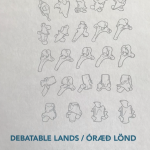
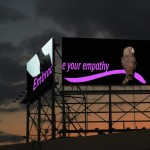
Labor Struggle [Against] Animal Capitalism
<Figure 3 here>
The mechanism of animalization cannot be separated from the histories of European racism, colonial violence, and capitalist exploitation. Capitalism requires animalized bodies – beings who can be rendered killable and denied rights. The labor and reproductive capacities of this underclass form the very foundation of value accumulation. This class is not organized strictly according to species; its composition is constantly shifting, with some beings elevated and others excluded. At the top of the biopolitical pyramid is a juridically protected space of whiteness and full personhood, while at the bottom is a growing mass of humans and other beings whose lives are instrumentalized as disposable components for production. A critique of capitalism must thus challenge not only the categories of class, race, and gender – but also the figure of the animal.
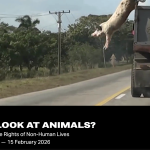
In my art and research project [Against] Animal Capitalism I explore the role of nonhuman animals in capitalist economy, and how capitalism produces and sustains human-nonhuman categories. My argument is that capitalism is not, in fact, speciesist, but that capitalism produces human-animal hierarchies as a way of organizing labor regimes. In other words, human-animal categories and labor regimes are co-constituted. Animalization justifies different labor regimes – from unpaid domestic labor to precarious migrant labor, to violently exploited slave labor, and of course, to the super-exploitation that nonhuman animals are subjected to. Full recognition as a human is available only to members of the global owning class.
Yet, the question of the animal has been largely marginalized in socialist politics, that traditionally build on the anthropocentric foundations of Western thought. The idea of world-building labor as a particularly human activity is central to the humanist tradition that stretches back to ancient Greece and Aristotle. It is also fundamental to the socialism that emerged in the 19th century from within that tradition. In Marx’s work, too, humans and other animals are divided by an ontological difference in their relationship to labor. For Marx, labor under capitalism harms humans not only because capitalists exploit laborers financially, but also – and importantly – because labor under capitalism is alienating and prevents workers from achieving full self-realization, both as individuals and as a species. What is stolen under capitalism is not just value but, more importantly, time – time that could be spent otherwise.
This theorization is, however, built on the unfounded assumption that nonhuman animals do not exist in this kind of open relationship to their life potential. Nonhuman animals are presumed to labor only for their own subsistence – and, as Hannah Arendt’s term “animal laborans” suggests, to do nothing but that. As a result, the difference between labor and leisure, between work time and life time, is assumed not to exist for nonhuman animals. This anthropocentric ontology leads to the idea that capturing, forcing to labor, or killing a nonhuman animal does not actually steal anything from it – since, supposedly, it would have been laboring anyway. The animal, in this framing, represents a site of ontological unfreedom: a being for whom freedom does not even exist. This, of course, has tragic consequences for nonhuman animals – and for animalized humans.
The “labor theory of value” that is central to Marxist theory is also limited by its anthropocentrism. According to this theory, only commodified human labor can produce surplus value. Nonhuman animals are understood either as “free gifts of nature” or as means of production – tools used by humans, but not themselves producers of value. Some scholars have, however, begun to challenge this idea. Political theorist Dinesh Wadiwel, for instance, argues that animals captive in food production industries do in fact produce surplus value by laboring on their own bodies. Similarly, many researchers of biocapitalism argue that the regenerative capacities of nature can be harnessed to produce surplus value that cannot be replicated by human labor or machines. If this is true, then the expansion of animal industries is not driven primarily by demand, as we are often told, but by the internal logic of capitalist production itself – with its relentless incentive toward growth. Framing the use of nonhuman animals as a dietary choice is deeply misleading: animal parts are used in everything, from cement and fertilizers to textiles, medicine, and books. This means that focusing solely on consumer behavior is not enough to bring about change. Political mobilization is needed to directly confront and shut down systems of production.
In [Against] Animal Capitalism I challenge the political Left to take nonhuman animals and animality seriously as paradigmatic to capitalism. If animal labor, alongside animalized labor, is necessary for capitalism to prevail, then recognition of the nonhuman labor force as part of the working class is the first step in expanding our political power. Our political organizing should acknowledge the ongoing resistance by animal others to their conditions as active anticapitalist struggle. Escapes, strikes, sabotage and direct action are all used by our nonhuman comrades in their fight against their oppressor. The political Left needs to join them in their struggle and come together as a revolutionary multispecies coalition [Against] Animal Capitalism. In the poster series Socialism for All Animals I have imagined what a campaign for a multispecies labor movement could look like.
Haunting
In the wake of Paul Crutzen and Eugene Stoermer’s proposal to recognize the Anthropocene as a new geological era, much debate concerned the possible geological marker of this turn. One suggestion was the presence of chicken bones in the layers of the earth after the invention of concentrated animal farming operations, or CAFOs. Industrially farmed chickens are currently the most populous bird on the planet, with 70 billion of them slaughtered every year. The amount of bones left behind by this mass-scale killing should now be visible in the sediments.
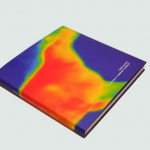
Yet, a more astonishing notion was proposed by the anthropologist Alex Blanchette who, in his work on vertical integration hog farms, noted that perhaps a better marker would be the absence of pig bones from the earth’s crust. While 1.5 billion pigs are slaughtered every year, nothing of them remains. This is because their rendering is so complete that everything in their bodies – flesh, intestines, skin, bones and even manure – is used as materials for commodity production and dispersed into the built environment. This becomes visibilized in the book PIG 05049, in which Christien Meindertsma carefully catalogues all the different uses of pig bodies, from biofuel to gelatine to leather to cement. The animal other has no grave, it is nowhere and everywhere, in, on and around our bodies, hidden in plain sight. It might be invisible to history, law, ideology and economy, but it is present in the materiality of our world, haunting us until it is recognized and properly grieved.
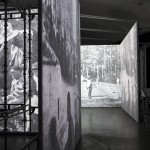
The three-part exhibition Pigs (Gustafsson&Haapoja 2021) took this simultaneous presence and absence of the industrial animal as its starting point. In Waiting Room, 16 spatially arranged speakers replay the sound of hogs on the last night before their slaughter. The echo of the voices of these long-dead animals fills the empty gallery space, creating a jarring sensation of the spatial presence and visual absence of these beings. In the one-channel video work No Data anecdotal images and texts map out ways in which hogs become visible again on the periphery of CAFOs as polluted rivers, diseases, antibiotic resistance, labor injuries and racial injustices, and occasional animal remains. There is a sense of a crime scene, but it is unclear what is the crime, who is the perpetrator, and where is the victim.
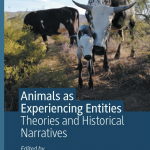
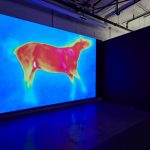
In Untitled (Alive) Paavo, a hog who has lived on a sanctuary for most of his life, shows an hour of his day, recorded by a camera on his head. We see what he is interested in, which is mostly all things edible, but also the interior of a house, with closets to explore and towels to tear down, and a cozy bed to stop for a nap on. Occasionally we see a glimpse of ourselves, somewhere on the periphery, making noise or staring in the air, standing in small groups. We are a part of the landscape, but definitely not the most interesting feature of it, compared to rotting apples, or a chicken. Still, we are there, in Paavo’s world, and he does see us and understand us in ways that we can only imagine.
<Figure 4 here>
References
Agamben, Giorgio: The Open – Man and Animal. Stanford: Stanford University Press, 2004.
Arendt, Hannah: The Human Condition. Chicago: The University of Chicago Press, 1998.
Blanchette, Alex: Porkopolis. American Animality, Standardized Life, and the Factory Farm. Durham: Duke University Press, 2020.
Butler, Judith: Frames of War. London: Verso, 2016.
Meindertsma, Christien: PIG-05049. 2007
https://christienmeindertsma.com/PIG-05049. visited 9.18.2025
Crutzen, Paul J. and Stoermer, Eugene F.: The“Anthropocene”. Global Change Newsletter; no 41. 2000.
Derrida, Jacques: The Work of Mourning. Chicago: The University of Chicago Press, 2001.
“Nonhuman Rights Project, Inc., ex rel. Happy v. Breheny. New York Court of Appeals Rejects Extending Writ of Habeas Corpus to Elephant.” Harvard Law Review. Volume 136, issue 4, February 2023. https://harvardlawreview.org/print/vol-136/nonhuman-rights-project-inc-ex-rel-happy-v-breheny/#footnote-ref-25
Ko, Aph and Ko, Syl: Aphro-Ism. Lantern Publishing & Media, 2017.
Marx, Karl and Engels, Friedrich: The German Ideology. New York: Prometheus Publishing, 1998.
Marx, Karl: Economic and Philosophic Manuscripts of 1844 PUBLISHER, PAGE
Nagel, Thomas: “What Is It Like To Be a Bat.” The Philosophical Review, Vol. 83, No. 4 (Oct., 1974), Published by Duke University Press. pp. 435-450.
The Nonhuman Rights Project. nonhumanrights.org visited 9.18.2025
Singer, Peter:. Animal Liberation: A New Ethics for Our Treatment of Animals. New York: Harper Perennial Modern Classics, Reissue edition, 2009.
Pesonen, Hannu: “Katkera kapina: Pohjalaisten susijahti johti kohuun ja kuolemaan.” Suomen Kuvalehti 4.10.2014
https://suomenkuvalehti.fi/kotimaa/katkera-kapina-pohjalaisten-susijahti-johti-kohuun-ja-kuolemaan/ visited 9.18.2025
Tsing, Anna: The Mushroom at the End of the World. Princeton: Princeton University Press, 2015.
“Chickens to be marker of Anthropocene.” University of Leicester News: 12 December, 2018. https://le.ac.uk/news/2018/december/12-chickens-to-mark-anthropocene. 12.12. 2018. Visited 9.18.2025
Wadiwel, Dinesh: Animals and Capital. Edinburgh: Edinburgh University Press, 2023.